Enterprise data platforms built between 2010 and 2020 were designed for a different set of requirements. Batch processing was the norm. Data warehouses were optimized for historical reporting. The primary consumers were BI tools and analytics teams. That architecture is showing its age in specific ways.
Signs the current platform is holding you back
The clearest signal is latency. When business decisions depend on data that is a day or more old because of batch processing cycles, the organization is making decisions against a stale picture. In fast-moving markets, this is a material competitive disadvantage.
A second signal is integration cost. Modern data systems need to ingest from dozens of sources: cloud applications, on-premise databases, event streams, APIs, and third-party providers. If adding a new data source takes weeks rather than hours, the platform is blocking the business.
The third signal is AI readiness. AI applications, particularly RAG systems and ML models, require data that is clean, versioned, and accessible through standard interfaces. A data platform not designed with AI workloads in mind will require significant retrofitting before it can support them reliably.
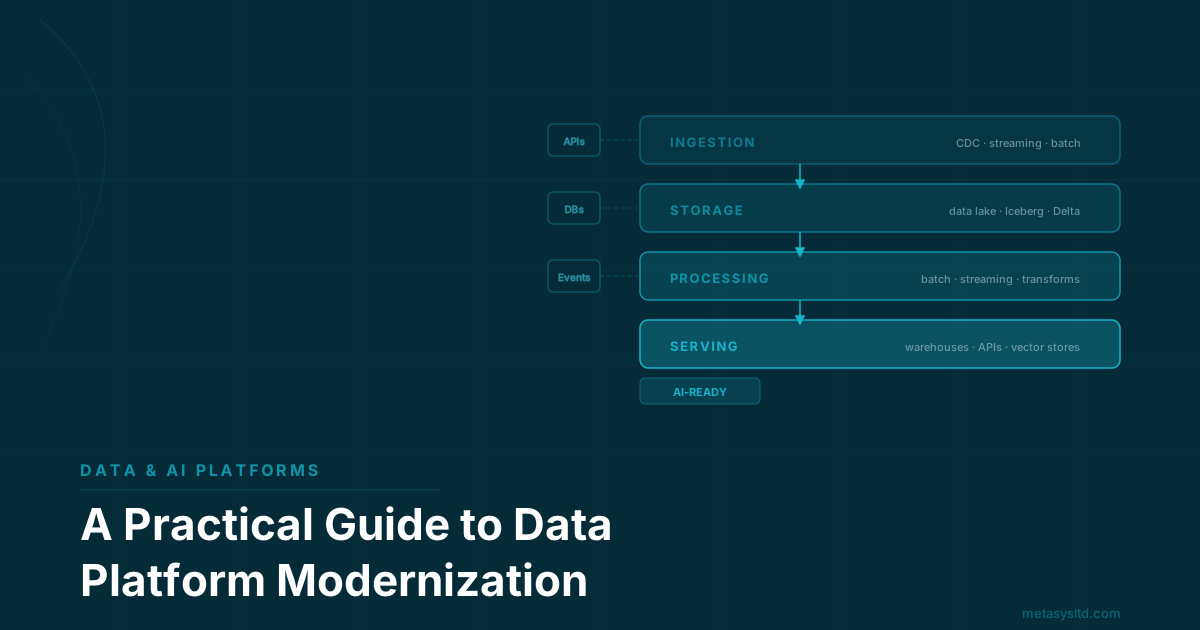
The four layers
Data platform architecture is easier to reason about in layers:
- Ingestion. How data gets in. Modern ingestion handles structured, semi-structured, and unstructured sources at different latencies. Change Data Capture from operational databases is increasingly standard.
- Storage. Where data lives and in what format. The shift toward open table formats such as Delta Lake and Apache Iceberg enables ACID transactions, schema evolution, and time travel on data lake storage while reducing lock-in to proprietary warehouse vendors.
- Processing. How data is transformed and prepared. The choice between batch-first and stream-first architectures depends on latency requirements. Most modern platforms support both.
- Serving. How downstream consumers access data. This includes the analytical query layer, the operational data store for application queries, and the vector database or feature store layer that AI applications need.
The most common modernization failure is treating these as separate projects. They are interdependent. Fixing the serving layer without fixing ingestion just moves the bottleneck.
Cloud-native vs hybrid
Full cloud-native gives you elasticity, managed infrastructure, and direct integration with cloud AI services. It is the right answer for organizations starting fresh or willing to invest in migration.
Hybrid makes sense when there is existing on-premise infrastructure that is functioning well, regulatory requirements that mandate specific data residency, or latency-sensitive operational workloads better served close to the application. The hybrid path is more complex to operate but more realistic for large enterprises with significant legacy investments.
How AI changes the requirements
Building AI applications on top of a data platform reveals problems that were invisible in a pure analytics context. AI models are sensitive to data quality in ways that dashboards are not. A dashboard can handle a few null values. A model trained on them produces subtly wrong predictions. Data quality and data lineage become first-class requirements.
The vector database layer, needed for RAG systems and semantic search, is a new infrastructure requirement with different characteristics from traditional data stores: approximate nearest neighbor search at low latency, embedding management, and index updates as data changes.
Our Data and AI Platforms practice works across this full stack. For industries where data quality and regulatory compliance are especially high-stakes, see our Fintech and Banking industry page for specific patterns.
A phased modernization roadmap
Phase 1: Fix ingestion. Get to near-real-time data freshness for the business processes that depend most on current data. This alone often delivers measurable business value before any further investment.
Phase 2: Standardize storage. Migrate to an open table format. This reduces warehouse vendor lock-in and makes the data accessible to a broader range of processing tools.
Phase 3: Enable AI workloads. Add the quality, lineage, and serving layer infrastructure that AI applications need. At this point, the platform supports both traditional analytics and modern AI applications from the same foundation.
The sequencing matters. Organizations that skip Phase 1 and jump to AI workloads typically find that data quality issues surface as model reliability problems. Fixing the foundation first makes the AI investment substantially more durable.